

EXECUTED RENAISSANCE:
The Generation of
Talents Killed by the
Soviet Regime
ALISA BYSTRYTSKA
When Ukrainians talk about Russian imperialism, they are referring to a long- term history of cultural appropriation, repressions, and the consequences of such atrocities.
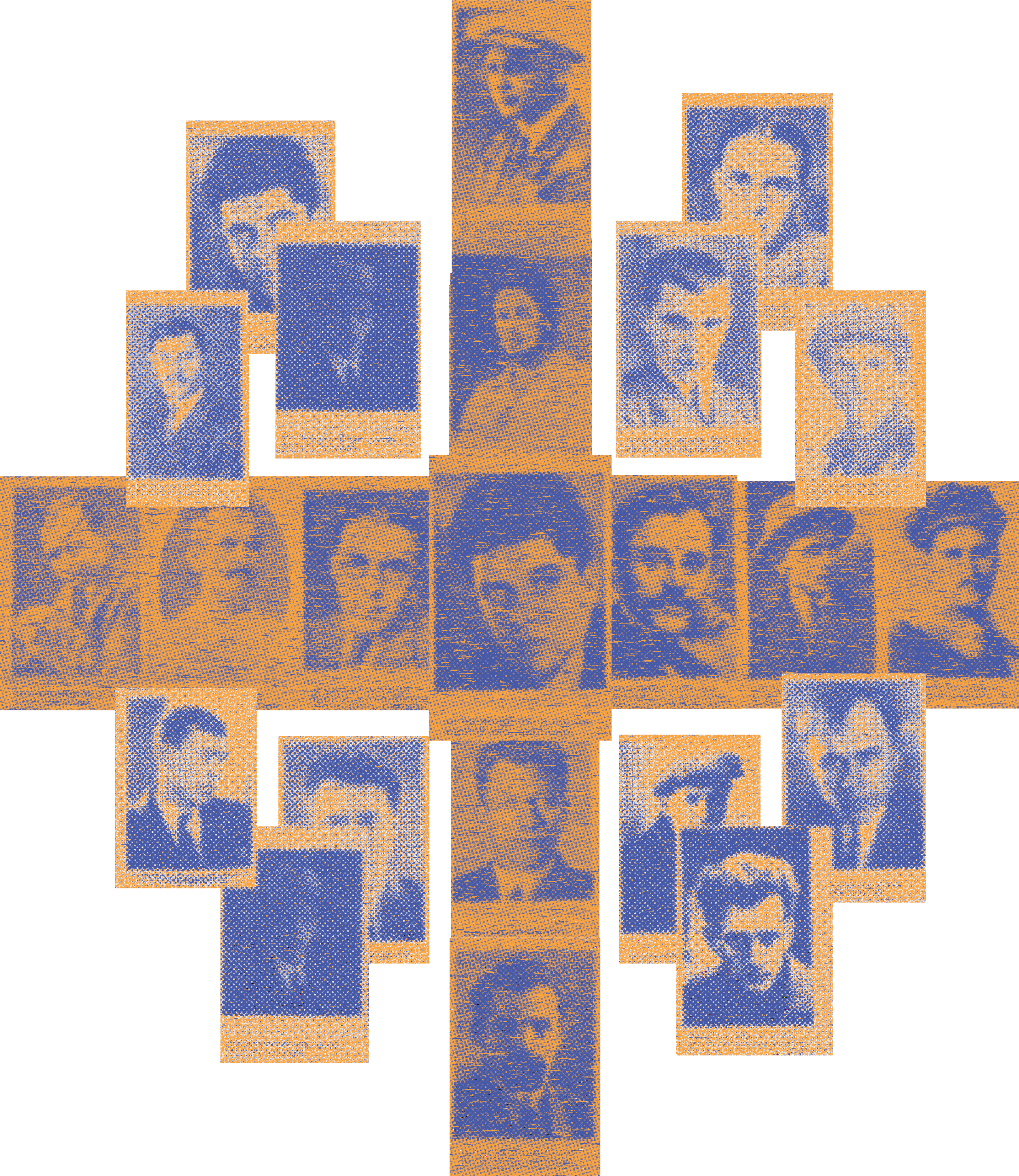
Almost 100 years ago, the whole generation of Ukrainian poets, writers, and artists was killed, repressed, or silenced by the Soviet regime. The ‘Executed Renaissance’ (Rozstriliane Vidrodzhennia) refers to a vibrant yet brutally repressed cultural and intellectual movement in Ukraine during the 1920s and 1930s. It was a period known for cultural achievements and flourishing artistic movements under the early Soviet regime, and then violently repressed during Stalin’s Great Terror. The movement is remembered today as a symbol of Ukrainian national resilience under Soviet rule.
Right after the Russian revolution and Ukraine’s brief independence (1917–1921), the Soviet regime created a tricky policy of Ukrainisation, which was the promotion of the Ukrainian language and culture as part of the regime’s efforts to gain control over opposition to the Soviet Union. This policy encouraged the emergence of a new generation of Ukrainian writers, poets, artists, and intellectuals eager to promote the culture, eliminate the narrative of the ‘poor’, and foster creativity with movements. This opportunity allowed poets to write in their native language. Artists also had a chance to get recognition for their talents, and playwrights gained the staging skills to showcase the richness of Ukrainian theatre.
Figures such as Mykola Khvylovy, Les Kurbas, Valerian Pidmohylny, Mykola Kulish, and Mykhailo Semenko became well-known Ukrainians through the burst of creativity in literature, theatre, visual arts, and philosophy. Most of the representatives of the Executed Renaissance claimed that their mission was to educate future generations on new moral and ethical principles and to raise national art to a higher artistic level.
This period also saw the founding of key institutions such as the Berezil Theatre, led by Les Kurbas, and literary groups like VAPLITE (Free Academy of Proletarian Literature), which debated Ukraine’s cultural trajectory and its place in the global literary landscape.
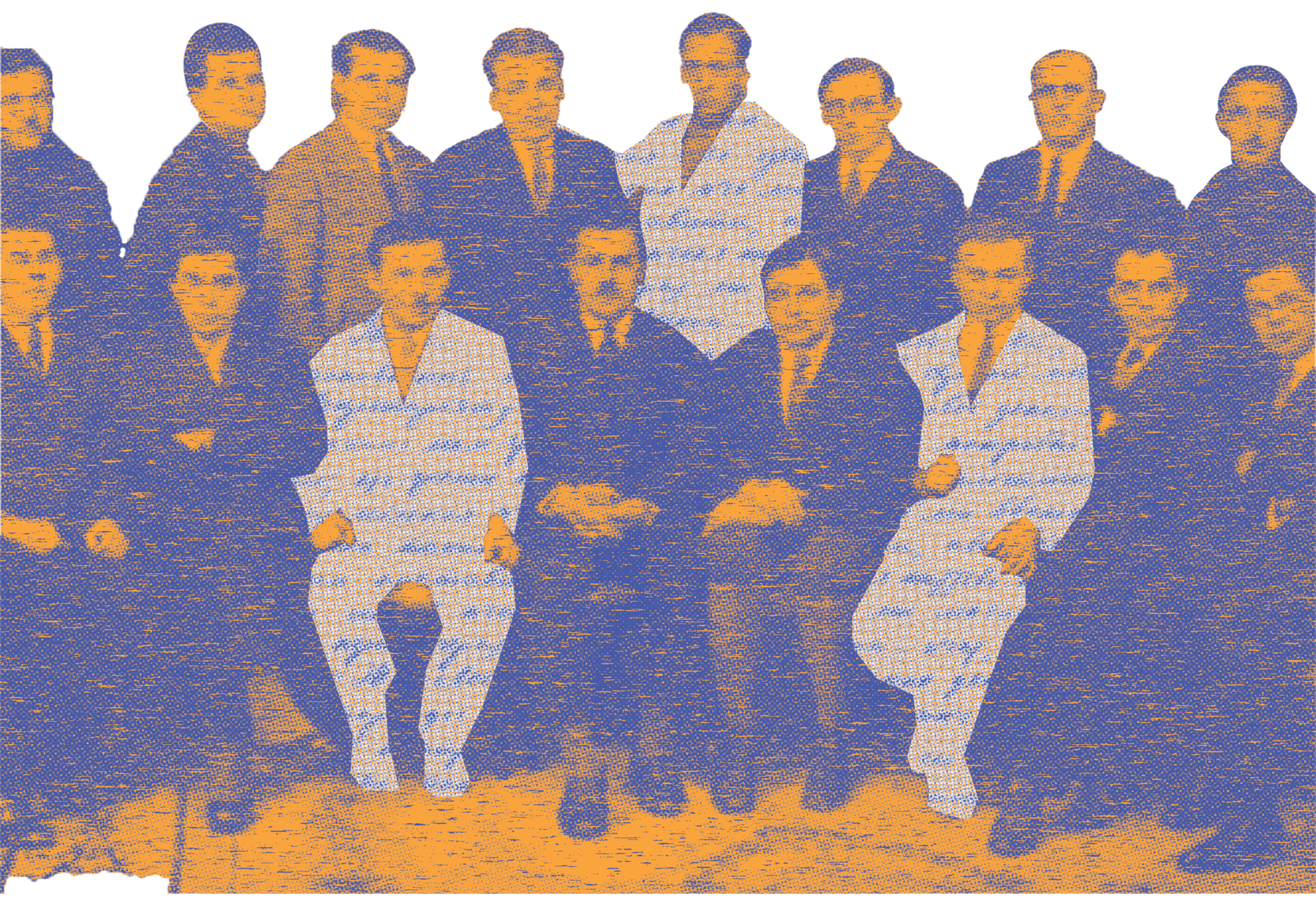
One of the greatest symbols of the Executed Renaissance is the Slovo House in Kharkiv (then the capital of Soviet Ukraine). Built in 1927 specifically for Ukrainian writers to live in, it was a modernist building where nearly all of Ukraine’s leading literary minds resided. ‘Slovo’ means ‘word’ in Ukrainian, reflecting the creative purpose of the residence. The state offered apartments in the Slovo House as part of its effort to elevate Ukrainian culture under the Ukrainisation policy. The building became a hub of artistic exchange, intellectual debate, and literary innovation. But it was also a gilded cage.
As the Soviet repression intensified in the 1930s, the Slovo House became a trap. The walls that once nurtured creativity now witnessed arrests, surveillance, and fear. The NKVD (The People’s Commissariat for Internal Affairs) agents infiltrated the building, and one by one, its residents were taken — often in the middle of the night — never to return.
Among those who lived in the Slovo House and were repressed were Mykola Khvylovy, who died by suicide in 1933 as a protest against the growing Soviet repression, and Mykola Kulish, who was executed in 1937 in the Sandarmokh forest massif, the Respublic of Karelia, Russia, which became an execution site for the thousands of victims of Stalin’s Great Terror
Today, the Slovo House is remembered as both a monument to cultural brilliance and a site of mass repression. It stands as a haunting reminder of how creativity and state violence coexisted under totalitarian rule.
Despite the initial support, the Soviet Regime began to consider literature and art as one of the areas of the ‘cultural front’. The wave of mass repressions against cultural figures of the movement began in May 1933, after the authorities had arrested Mykhailo Yalovyi — a Ukrainian poet-futurist, a playwright and a prose writer. Mykhailo was arrested on charges of espionage and organising an assassination attempt on the second secretary of the Communist Party, Pavlo Postyshov. This arrest was the last straw for Mykola Khvylovy, who committed suicide in a protest on 13th of May, 1933. On that day, he invited his friends over. At the end of the gathering, he told them that he would show them how a proletarian writer should work in the current conditions and went into another room. Instead of presenting a new work, a few moments later, a shot rang out, killing the writer. In his suicide note, he said: ‘Yalovyi’s arrest was the execution of an entire generation. For what? For being the most sincere communists? I don’t understand anything…’ (‘The suicide note’, 2021).
The massacre of Ukrainian artists culminated in 1937. From 27 October to 4 November, to ‘over fulfil the plan’ to destroy the ‘enemies of the people’ on the 20th anniversary of the October Revolution, NKVD executioners shot 1111 prisoners of the Solovetskiy special purpose camp in the Sandarmokh (Kotubei- Gerutska, 2022). More than 250 of them were the representatives of the Executed Renaissance. According to the researchers, the prisoners were ‘prepared’ for the execution in three rooms of their barracks. Their personality was checked in the first room, and the prisoners were undressed. In the second room, they were tied up, and in the third room, they were beaten on the head to make
them lose consciousness. Then, the prisoners were
loaded onto trucks and transported towards the
Sandarmokh. The half-alive prisoners were thrown
into large pits, and a member of the execution
brigade — Mikhail Matveyev — personally shot
each prisoner in the head.
The term ‘Executed Renaissance’ was popularised
in 1959 by Ukrainian literary critic Yurii Lavrinenko,
who compiled a landmark anthology of Ukrainian
literature from 1917 to 1933, published in the West.
The book served as a memorial and a call to restore
Ukraine’s lost literary heritage. For decades, Soviet
authorities suppressed knowledge of these figures,
censoring their works and rewriting cultural
history. Only in the late 1980s and early 1990s,
during ‘perestroika’ (political reform movement by
Mykhailo Gorbachov, the last leader of the Soviet
Union) and following Ukraine’s independence in
1991, did a full reevaluation of the period begin.
Today, the Executed Renaissance is recognised as one of the most crucial and tragic periods in Ukrainian cultural history. Here, in Scotland, the Executed Renaissance wasn’t left without attention. On the 31st of May 2025, ‘shevchenko.philia’, a non-profit organisation that promotes Ukrainian culture in Scotland, hosted a tribute exhibition dedicated to the Executed Renaissance, followed by the documentary screening of ‘Slovo House’ (2017) by Taras Tomenko. The exhibition included a memorial plaque of every artist affected by the regime, documents from NKVD describing their searches and arrests, the exploration of literary organisations and magazines that existed at the time and a much more in-depth description of this significant period. As Arina Tishchenko, who came up with the idea of such exhibition, explains: ‘When I first learnt about the Executed Renaissance, I kept coming back to the figures of the period and philosophy of their art... One thing was always clear — Ukrainian culture would have looked completely different if thousands of people had not been killed or imprisoned in the 1930s. Wrapping the only reason — Ukrainian identity — in false denunciations, accusations, and solemn speeches for everyone and no one. It was important for me to make it clear to the locals how much art was destroyed and how barbaric it was. I did not have a question about organising this event, the idea came to me organically, as something that went without saying, leaving me no choice but to bring it to life.’
Bibliography:
‘Передсмертна записка Миколи Хвильового.’
[‘The suicide note of Mykola Khyvoly’]. Digital
Archive of Ukrainian Liberation Movement, 2021Olesya Kotubei-Gerutska. ‘Сандармох: трагедія “Розстріляного відродження”, яку Україна не має права забути.’ [‘1111 victims of Sandarmokh: the tragedy of the “Executed Renaissance”, which Ukraine has no right to forget’]. Суспільне Культура, 3 November 2022,
‘Розстріляне Відродження: Як Москва вбивала українських митців 90 років тому.’ [‘The Revival of Those Shot Dead: How Moscow Killed Ukrainian Artists 90 Years Ago’]. Ukrinform.ua, 7 July 2023,
‘“Розстріляне відродження” як культурний процес на Україні в 30-х роках.’[‘The Executed Renaissance’ as a cultural process in Ukraine during the 1930s’]. Освіta.UA, 8 October 2010 ‘Slovo Building. How Did the Executed Renaissance Affect Kharkiv’s Cultural Identity?’. Svidomi.ua,