




RESILIENCE IN RIFFS
Telema and the Rise of Ukraine’s
Wartime Metal Scene
ARTEM PISHEL
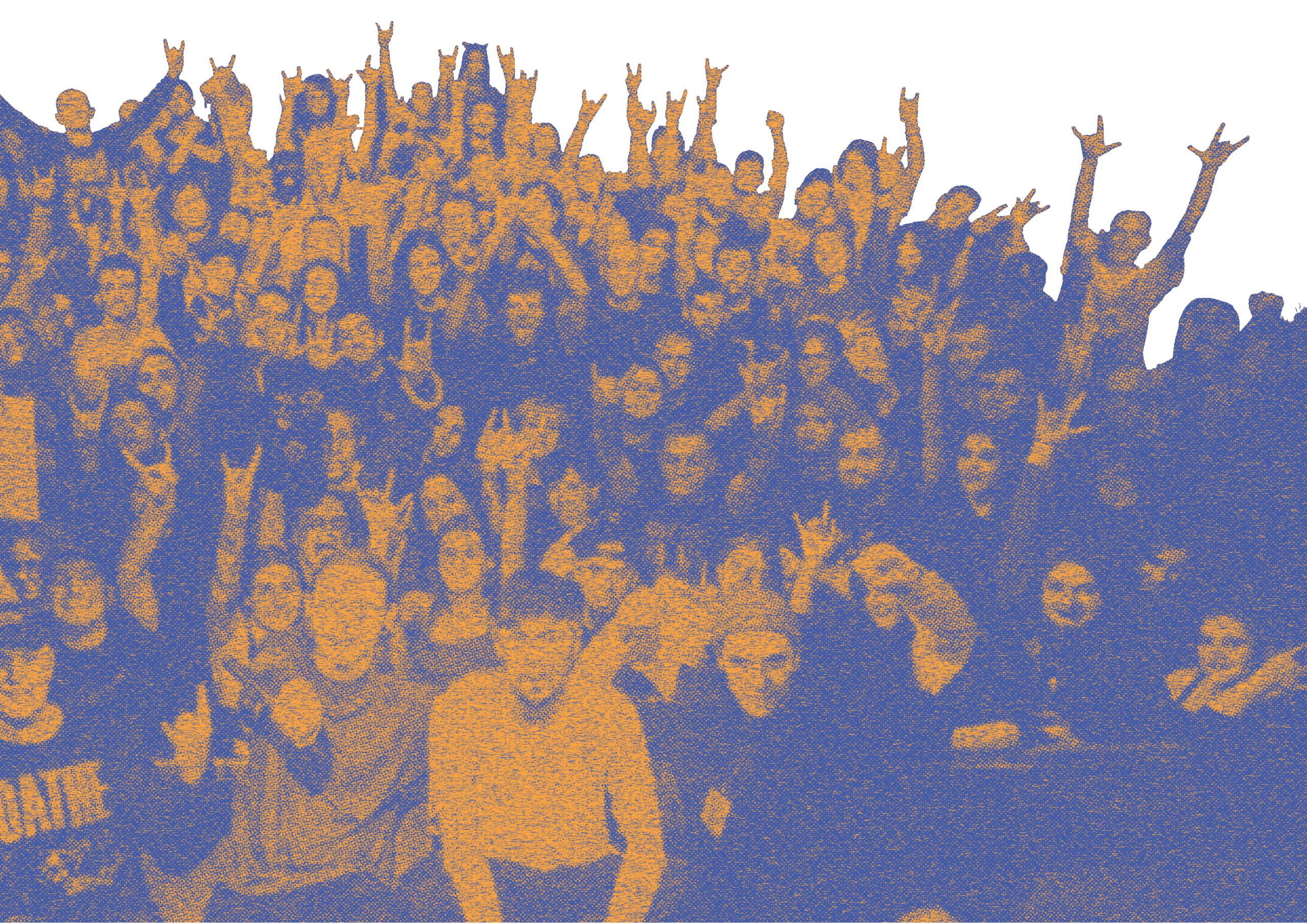
From the onset of Russia’s full-scale invasion of Ukraine in 2022, the country’s cultural landscape has undergone seismic shifts. Among the most vibrant transformations has been the surge of a fiercely resilient metal scene—gritty, defiant, and deeply embedded in wartime reality. At the heart of this wave stands Telema, a metalcore outfit from Ivano-Frankivsk, whose name has become increasingly synonymous with the emotional urgency and sonic intensity of contemporary Ukrainian heavy music.
FORGED IN CRISIS
Telema emerged in 2019, founded by brothers Taras
and Roman Fihol, with a clear mission: to sonically
replicate the chaotic energy of basement shows and
funnel it into tightly wound, cathartic recordings.
‘There are no deep meanings or hidden subtexts—
we just wanted to convey the atmosphere of chaos
that engulfs us and the crowd when we play,’ Roman
once explained during an interview about their
single ‘Kolotnecha.’
Since the war began, their environment has dictated not only the mood of their music, but its production and distribution logistics as well. ‘We’ve learned to adapt,’ says Taras. ‘You get used to playing in these conditions. The main obstacle is the Russians— everything else, we’ve found ways to manage.’
Recording now happens in bursts between power outages, using guitars laid down during brief electricity windows, vocals tracked with basic setups, and mixes passed across Telegram threads. The urgency of creation mirrors the urgency of life.
CONCERTS AMID CURFEWS AND SIRENS
Live performances in wartime Ukraine are
unpredictable. ‘Air raid sirens can completely
disrupt a show,’ says Vlad, the band’s bassist. ‘There
are times when everything is exploding with energy,
and suddenly you have to evacuate to a shelter.’
Despite these disruptions, the band remains
committed. ‘We’re used to it now,’ adds Roman.
‘Most of our concerts are for charity. We’re always
contributing to fundraisers.’
Logistical challenges are also formidable. Touring across Ukraine involves curfews, shifting venues, travel restrictions, and often hauling gear across the country via train. ‘Trekking with cymbals, guitars, merch, and tech is a challenge,’ Roman notes. ‘But our booking agency now handles most of the hard parts, which lets us focus on the music.’
Yet even amidst such obstacles, the band continues to rise. In 2024, Telema graduated from an early slot to headlining the Dark Stage at Faine Misto, one of Ukraine’s largest alternative festivals. It was a milestone that underscored their growing prominence.
CONNECTING WITH A NEW GENERATION
As foreign acts stopped touring Ukraine, local
audiences turned inward—and upward. ‘We see
new faces at every concert,’ says Taras. ‘And more
importantly, we see younger people, those who are
still forming their musical tastes. It’s rewarding to know they’re choosing our direction and sticking
with us.’
This surge in local engagement has also led to a
linguistic and emotional pivot. ‘We switched entirely
to Ukrainian lyrics after the full-scale invasion,’
explains Roman. ‘It allows us to be more honest and
expressive. Vlad adds: ‘Oddly enough, the war has
had a positive effect on modern Ukrainian culture.
People have rejected Russian influences, and this has
elevated homegrown music.’
AIMING FOR THE WORLD STAGE
Despite their local focus, the members of Telema
harbour ambitions that extend far beyond Ukraine.
‘Why do it otherwise?’ Roman asks. ‘Reaching a
wider audience is essential for growth.’ Taras agrees,
‘We want to share our music with people abroad
who may have been listening to us online for years
but never had the chance to see us live.’
Asked what message they hope to deliver, the band’s
answer is simple and powerful: sincerity. ‘We want
to convey honest emotions, without melodrama,’
Roman says. ‘What you see onstage in Ukraine is
what we’d bring to any other country.’
THE FUTURE OF UKRAINIAN METAL —
AND OF TELEMA
The Ukrainian metal scene continues to evolve
rapidly. ‘It’s growing,’ Roman observes. ‘And those
who aren’t afraid to be themselves, who don’t try to
conform, are the ones who’ll break through.’ Taras is
equally optimistic. ‘There are so many young bands
now—breathing down our necks. That’s a great
sign.’
Within Telema, the focus is on refining their identity. ‘Our goal is to achieve a sound that is unmistakably ours,’ Roman says. Long-term? ‘A European tour,’ he adds with a smile. Vlad echoes the sentiment: ‘We want to leave our mark on the history of Ukrainian heavy music—and, ideally, reach a global level.’
The group is already working on new material, planning releases, and hinting at surprises before the year is out. ‘It’s about growth and connection,’ says Taras. ‘We’re not just writing songs—we’re trying to build something lasting.’
SHATTERING STEREOTYPES, ONE
BREAKDOWN AT A TIME
Among the band’s quieter missions is destroying
misconceptions about Ukrainian music. ‘There’s this
stereotype that if it’s Ukrainian, it must be of lower
quality than American or European work,’ Vlad
says. ‘We don’t just want to break that stereotype—
we want to obliterate it.’
Despite past lineup changes, Telema’s creative heart has remained stable. ‘The songwriting team hasn’t changed,’ Taras confirms. ‘We’ve all been friends for a long time, so even the newer members fit in naturally.’ As Roman puts it: ‘Now we’re finally all moving in the same direction.’