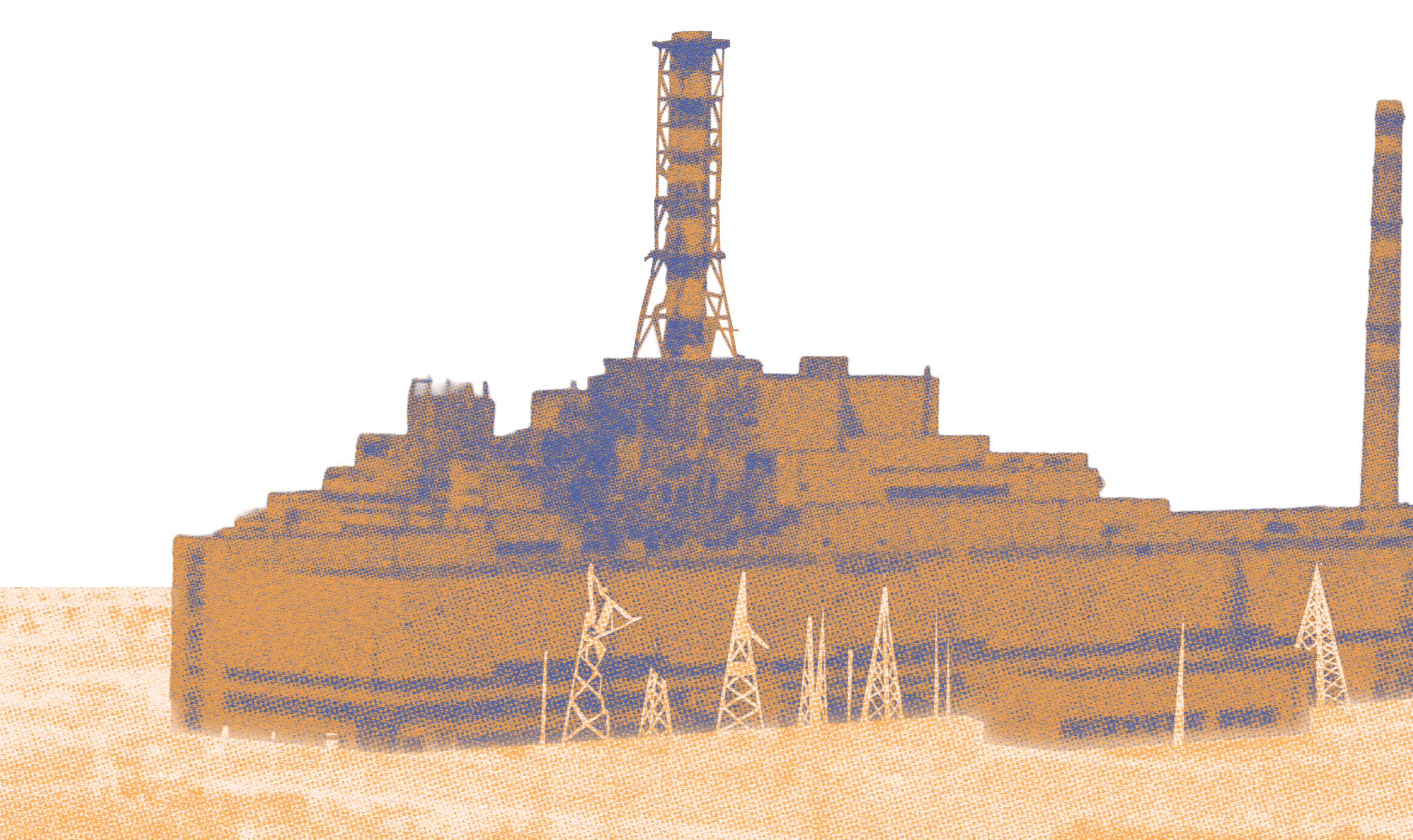

HOW TO STAY ALIVE
After Working at the Chornobyl Nuclear Power Plant
ANNA KOZACHUK
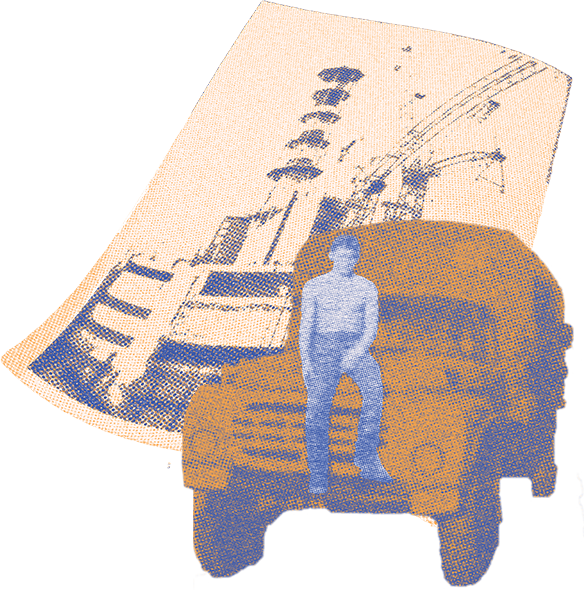
Mr. Tsvirkun became a ‘walking reactor’ at the age of 22 as he was sent to work at the Chornobyl nuclear power plant, where his radiation dose went off the scale.
Now Yuriy Tsvirkun is a 60-year-old man who lives in the small Ukrainian village Kyryivka, 312 kilometers away from Chornobyl. He continues to live his life happily despite the hard times spent at the nuclear power plant.
In 2022, radiation almost caught him twice. Ukraine, his homeland, has been suffering at the hands of Russian soldiers, who attacked two nuclear power plants on the 24th of February, one of which was Chornobyl. Since the Russian occupation continues, the radiation continues to increase. If the Russian troops carry on targeting nuclear facilities, the consequences may become terrifying for the whole of Europe.
‘They are wacky. They don’t understand that if it explodes, the wind could blow in their direction,’ he said.
Since the infamous Chornobyl disaster on the 26th of April 1986, when the fourth energy block blew up, the cancer rate in Ukraine has increased eight- fold.. Moreover, the amount of isotope radiation released into the atmosphere after the explosion in Chornobyl was forty times higher than after the USA’s bombing of Hiroshima and Nagasaki in Japan during World War II.
‘I got to know about the explosion of the Chornobyl nuclear power plant only one or two months after it happened,’ he said.
At that time Yuriy was a soldier in the Samara region, ussia, about 1800 kilometers away from Chornobyl. So, the news about the disaster found him far from home. Soldiers who returned back from Chornobyl personally told Mr. Tsvirkun about what had happened, because the Soviet Union made efforts to conceal this information from the mass media.
Ukrainian historian Ivan Kostenko, whose grandfather was also a Chornobyl liquidator—one of the people who removed the remains of the explosion—shared his opinion on why the Soviet government did not want anyone, especially abroad, to know about the tragedy on the power plant.
‘If the Soviet party says that the Soviet Union is a progressive country that builds its own communism, there could not be any problems,’ Mr Kostenko said. So, the best way to fight the problem was to conceal it.
In 1987, the year when Yuriy returned to Ukraine, he was drafted to work at the Chornobyl power plant. ‘I would never think that I could take part in the liquidation of the accident as I was only 22,’ Yuriy said. ‘I thought they would take some old people.’
He knew where he was going to go, but his thoughts were the same as those of other young boys at that age. For the first 3 days he was staying in Korosten, 159 kilometers away from Chornobyl, to help him acclimate to the radiation. He felt dizzy and had an unquenchable thirst. Then he moved to Radcha, which is 60 km closer.
There were around 500 people in the state. Every morning at 4 a.m., the squad went to the nuclear power plant. Their path was poured over with a special solution to catch the radiation dust. When the liquidators had to work in dangerous conditions, they were given special military protective suits with the respirators ‘Lepestok’ (a Petal).
‘There were tons of them. We had to change them very often but, to be honest, nobody even paid attention to that,’ he recalled. Yuriy’s job was to take out the graphite from the concrete fragments as they radiated. The radiation was so high that he only worked for 3 minutes at a time.
‘You can not even eat ice cream for that time, you know,’ he said. After work like that, all of them had to take a cold shower for 10 minutes as hot water would expand their pores and accumulate more radiation. Then, everyone was checked with the Geiger counter, which was an electronic instrument for measuring ionizing radiation. During the working day, everybody had to have a special accumulator of radiation which helped the supervisors record the workerʼs dose per day.
‘They definitely wrote down the lower dose. I think I have much more than what was written in a document. Nobody would jot you down the truth. I had 8,036 Ber (unit of measurement of an equivalent radiation dose) per 96 days officially, but for real we could get 250 Ber per hour,’ Mr Tsvirkyn said.
The norm for people who work with radiation is 0,5 Ber per 96 days. Yuriy’s dose was 16 times higher than it should be, not even considering the fact that his reported dosage was still understated. Yuriy’s other task was washing the 3D engine room with a powder that he also used to wash out the radiation from his uniform. Later, he cleaned the roof of the 4th energy block when the robots that were there broke down from the effects of the radiation.
Those robots just died. We put them aside and worked instead. They could not work due to those conditions, but we, humans, worked,' he said. Nevertheless, this dangerous job was well paid. Yuriy Tsvirkun got a fivefold increased salary. Unfortunately, he did not remember the exact number.
As for the food there, Mr Tsvirkun recalls it positively. There were lots of different delicacies like salmon, cod liver, condensed and chocolate milk, chocolate, and fresh fruits. At that time, all the mentioned food was a pure luxury that the average Ukrainian could not afford.
On weekends, Yuriy always had some kind of entertainment, like listening to the choir or watching film demonstrations, so that he didn’t feel as much tension, despite the unusual conditions. Yuriy also mentioned that there was a doctor, who supported him, saying he needed praise for that moment: 'Think less, live a life as you did it before.'
Now, Yuriy is a pensioner. He receives 250 Hryvnias (5 €) a month for being a former Chornobyl liquidator. 'It won't be so offensive to me if they don't give it at all,' he said.
Yuriy remains positive. After he endured Chornobyl, he started to appreciate his life, friendship and supportive family more than ever. 'When everybody at school was asking me if my dad was a liquidator, I replied yes,' being so proud of my father,' his daughter Juliana said. 'Sometimes I can see pain in his eyes, but he tries to stay happy,' she added.
His wife Tetyana described Mr Tsvirkun as a reliable friend who would always support her when she needed help. Tetyana shared a story of their marriage at the time when everyone in her village was spreading rumors about them.
'They were saying that he could not have any children as there was an assumption that he had leukemia, cancer of the body's blood-forming tissues. I set a goal and said that he could manage everything together with me. Now we have two children, one 35-year-old son, who already has his own kid, and one 31-year-old married daughter,' she said. Both the son and the daughter's husband are fighting for Ukraine now.
All of Yuriy's life the number 22 has followed him, Tetyana says. It was the number of his house, the age and the day when he was sent to the nuclear power plant, his birth date, and the number of the car in Chornobyl. 'Thank God our wedding was on the 26th of February,' he said.