
WHERE DO THE CHILDREN PLAY?
VALERIA GERUS

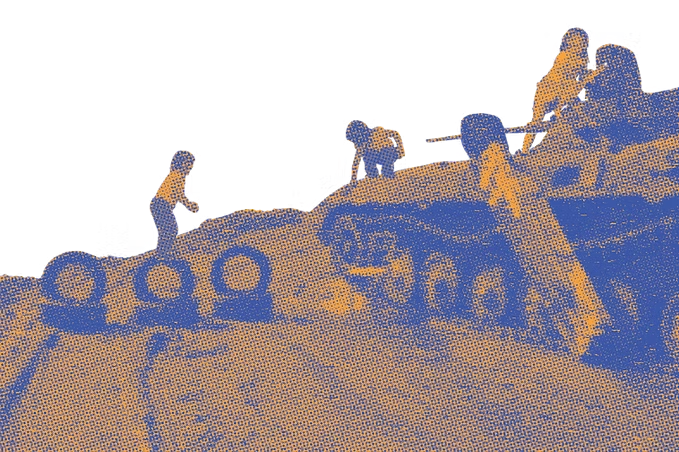
Children play on playgrounds, in parks, and in gardens. Children play at home, in their backyards, and in playrooms. Children play in schools with their classmates and teachers, at home with their parents and siblings, and in kindergarten with their peers and nannies. Children play on abandoned buildings. Children play on ruins where their schools used to be. Children play on the ruins of their houses. Children play in missile craters.
The last four places where children seek amusement are hauntingly disturbing, marked by the echoes of destruction that no child should ever have to endure. Parents do not wish for their children to play in locations other than designated safe areas. Yet, nowadays, when kids seek entertainment, there are no gardens, parks, or playgrounds available — they are ruined.
During the first month of the war, my family and I moved to the central part of Ukraine, in fear that the capital, where we lived, would be the main target. We feared that the bridges would be bombed and that we wouldn’t be able to escape to the right bank of Kyiv. On our way, we heard military jets flying by and missiles being fired. I had a feeling that they were chasing us. But even when we arrived, jets would fly above the house we stayed in almost every night. My parents told me they were Ukrainian planes patrolling, but I still wonder whether it was indeed patrols, or if they told me that to calm me down.

Ukraine is at war. My country is at war. Many other countries all around the world are at war. Children all around the globe play on craters, ruins, and abandoned buildings, seeking entertainment to forget about the horrors around them, just for a brief moment. I look at all of the photos and videos of destruction in the news, I read Ukrainian media outlets that report on current events around the world, and I see how people suffer. I see the economy being ruined, lives being destroyed, and buildings becoming rubble.
My classmates who stayed in Kyiv tell me about air raid alerts, school being interrupted because of them, and learning time being wasted while they are hiding in a bomb shelter or underground parking. Their siblings are afraid of the sounds every night. If this is happening in the capital, presumably the most defended part of Ukraine, I can’t imagine the terror people endure in the Eastern part of my country.
There are a lot of international organisations that help children live through this war, such as UNICEF and Save the Children, as well as Ukrainian funds like the Rinat Akhmetov Foundation. These organisations often collaborate with local communities, governments, and other NGOs to provide comprehensive support. They work to create safe spaces for children, offer counselling and mental health services, distribute essential supplies like food, clean water, and medical care, and focus on educational initiatives to help rebuild shattered lives and futures. Their efforts not only address immediate needs but also aim to build resilience among children and communities, helping them recover from the psychological scars of conflict. They help children find hope in the demoralised world we live in.
Children get torn away from their parents, parents torn away from their children. Whether through bombings shattering homes, or the heart-wrenching act of children being snatched away and taken far from their loved ones — the pain is unbearable. Innocence is shattered and replaced by fear and unfillable voids.
I don’t want my future kids and grandkids to experience this ‘amusement’ of playing on ruins. I want them to feel safe and happy. I want children to play on a playground.